
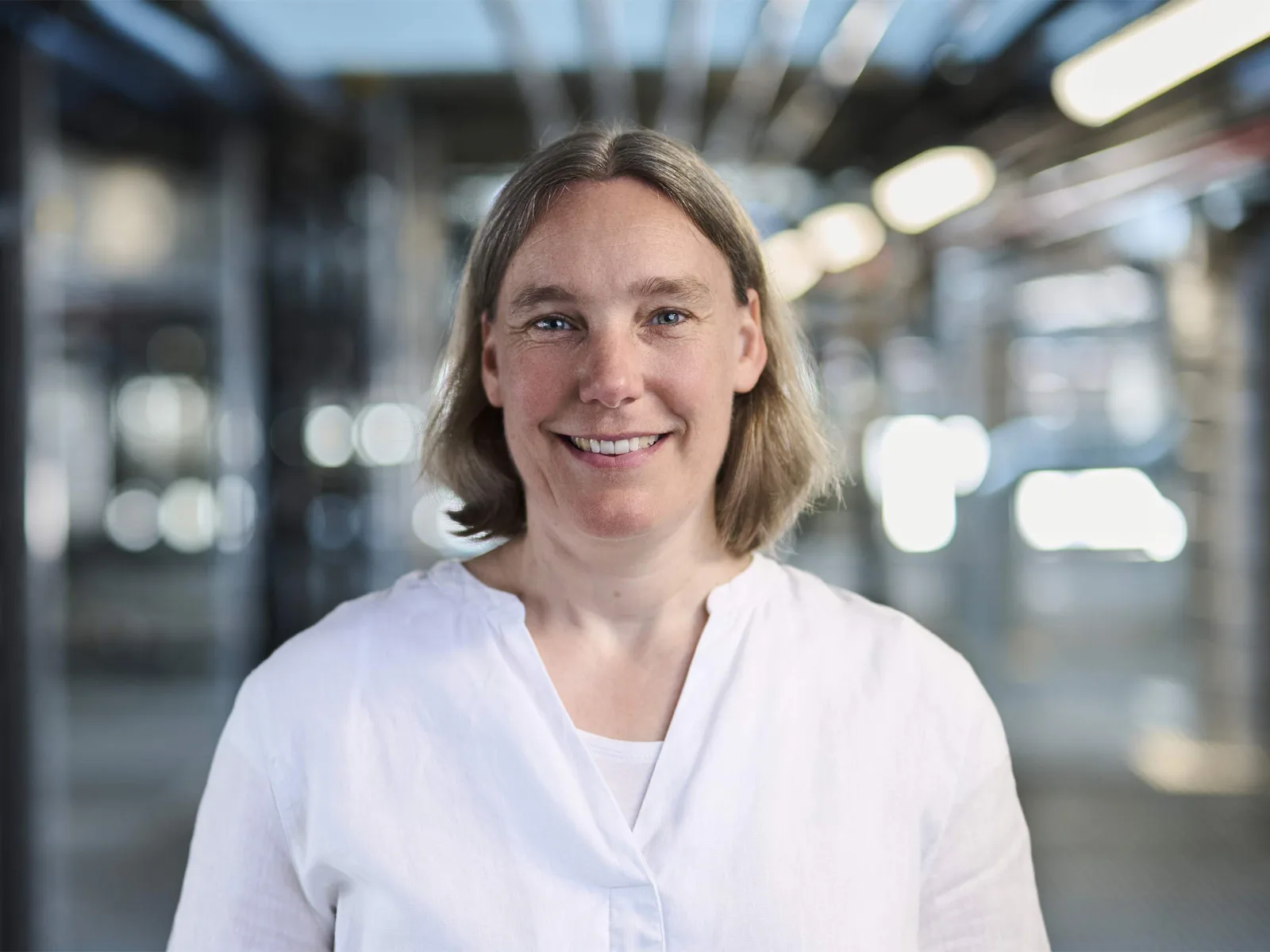
We’ve grown! At our new Technikum 6 at the Ulm Innovation Centre, start-ups can now work on quantum technologies in over a dozen brand-new laboratories. Kathrin Höppner has been overseeing the development of the Ulm Innovation Centre as a manager right from the start. In this interview, she explains why Technikum 6 – our new 600-square-metre laboratory complex – is far more than just a new building, and why she learnt one thing above all else during the planning process: to ask questions consistently.
The Technikum 6 has been completed. What makes this place so special to you?
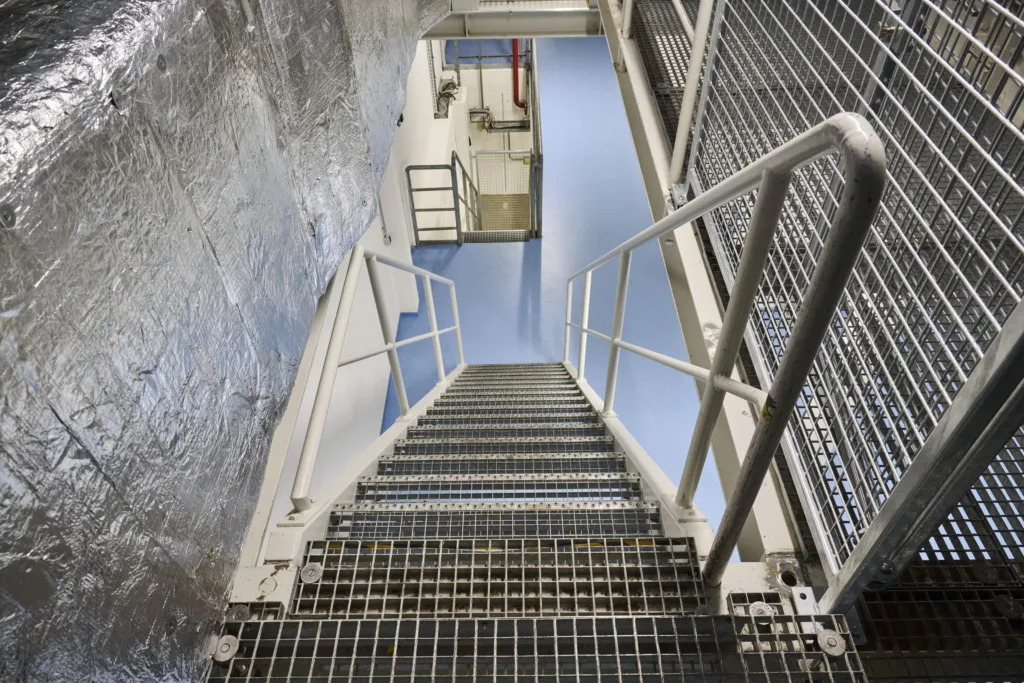
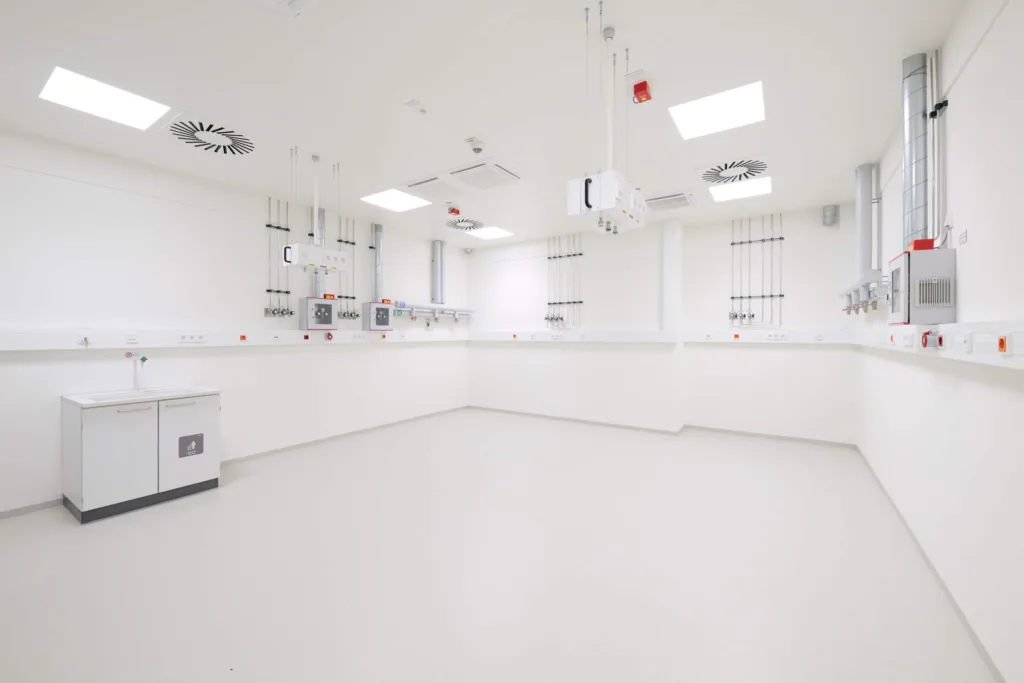
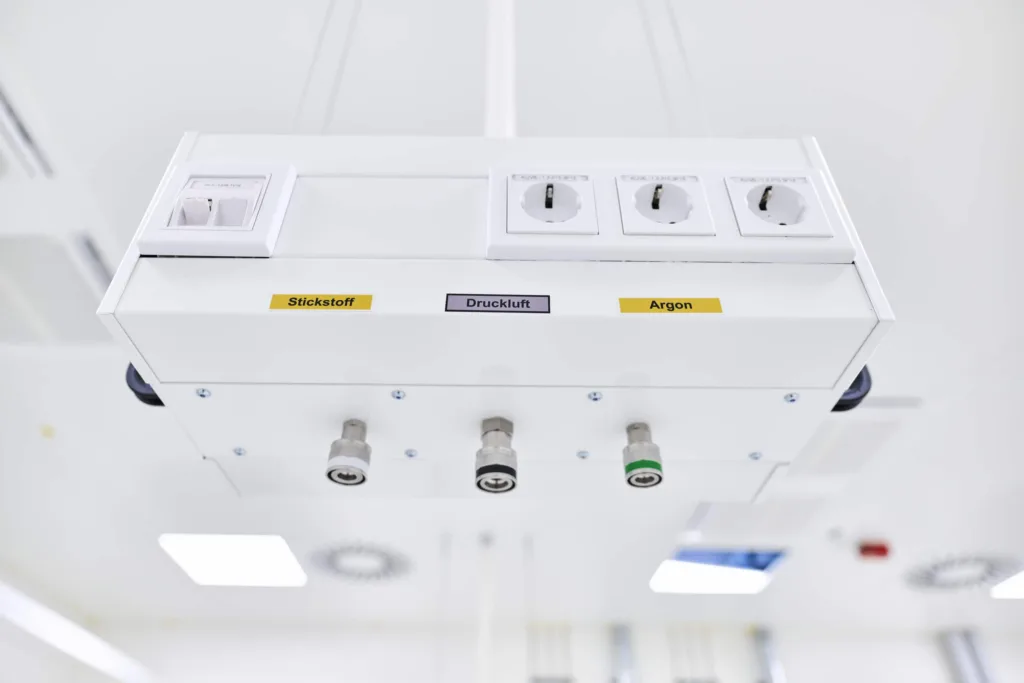
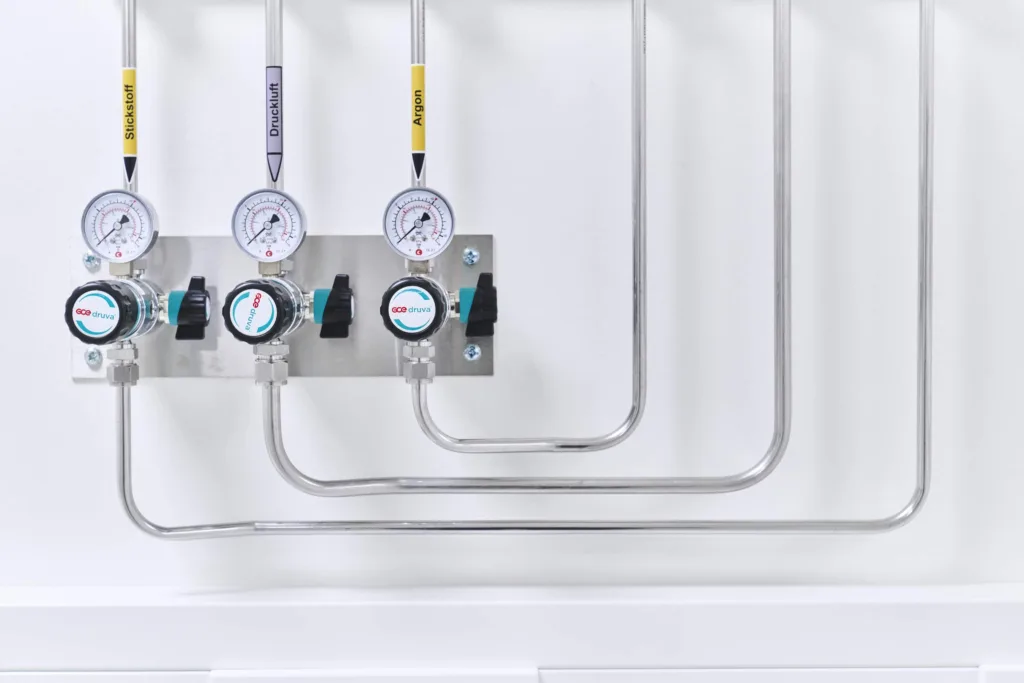
When I walk into the area, it almost feels like another world. It’s a completely new laboratory environment and exactly the infrastructure that modern quantum research requires: optical laboratories with laser safety measures, temperature stability and connections for nitrogen, argon, compressed air and process cooling water. They perfectly complement our existing, already modernised infrastructure. We already have an electronics workshop, a mechanical workshop and a chemistry laboratory, equipped with, amongst other things, a 3D printer, soldering stations, an ultrasonic bath, a pillar drill and a circular saw. Companies can make full use of all these facilities, whilst we take care of upkeep, maintenance and safety. What makes Technikum 6 special is that we have deliberately designed the laboratories to be flexible. The aim was to cater for both sides: our established contractors as well as new start-ups that we do not even know about yet.
A laboratory facility like this doesn’t spring up overnight. How did this journey begin?
With a very steep learning curve. I’m originally an atmospheric scientist, so I had to familiarise myself intensively with many new subjects. Our building used to be part of the Daimler Research Centre, and over the last few years we have gradually adapted the existing structures to our requirements and refurbished them. Together with a colleague from the Institute of Quantum Technologies, I oversaw this initial process. These experiences were directly incorporated into the planning of Technikum 6. Of course, we weren’t alone in this: DLR Construction Management, architects and experienced specialist planners made a significant contribution with their expertise. And, naturally, we were able to build on the wealth of experience gained from our existing laboratories. We now have a very good understanding of what quantum start-ups need.




What was the most important lesson you learnt from this?
Ask, ask, ask – and keep asking! In a field as complex as the design of optical laboratories, it is crucial to communicate precisely, as there are always technical and structural limitations. I’ve learnt that it’s perfectly fine to say, ‘I don’t know. Please explain it to me.’ This approach has also changed the way we work with companies. Especially with complex projects, differing expectations can quickly arise. Today, we address things very clearly: ‘This is what we can offer.’ This clarity prevents misunderstandings and enables us to find good joint solutions.
With Technikum 6, DLR QCI is, after all, pursuing a larger goal. What is it?
We’ve achieved a great deal and built up a lot in recent years. But quantum start-ups have a truly great need for infrastructure. That’s a absolutely crucial factor for their development! However, this requires not only high-quality laboratories, but also office space, meeting rooms and places for the teams to gather. That is precisely the idea behind our Innovation Centre: short distances and chance encounters from which new ideas and collaborations emerge. Our aim is to further develop the Innovation Centre into an even stronger and more vibrant start-up hub for quantum technologies.
“We would like to develop the Innovation Centre into an even stronger and more vibrant start-up hub for quantum technologies.”
How has the atmosphere at the site changed as a result of the growth?
In the early days, the companies were much smaller, and I knew almost all the staff personally. It was like one big flat-share. Today, the site is larger and more professional. But that sense of community has stayed the same! When companies come to us and say, ‘Great that it’s working again’ or ‘Thanks for sorting out the problem so quickly’, I immediately feel that special sense of optimism again. It’s something you sometimes forget in day-to-day life: we don’t develop quantum computers ourselves, but we create the essential conditions that enable others to work on them. That’s why it’s all the more important to keep reminding ourselves what we’re actually contributing to here.
You’ve been involved with the site right from the start. What goes through your mind when you walk through the new laboratories today?
When we show groups of visitors round the site or tell new staff how everything has developed, it strikes me once again: it’s truly impressive what we’ve achieved together over the past few years. These rooms, offices and laboratories represent an environment where research is possible and businesses can grow. I don’t think we should be constantly patting ourselves on the back. But sometimes it’s nice when someone from outside says: ‘Something has really been achieved here.’
What are your hopes for the coming years?
Naturally, I’m looking forward to strong growth: that more companies will join us, that the innovation centre will continue to develop, and that we can consistently continue along the path we’ve set out on. With Technikum 6, we’ve laid the structural foundations for this. Now, above all, I’m looking forward to seeing the laboratories come to life – to new ideas emerging, companies growing here, and us being able to play our part in further strengthening Ulm as a key hub for quantum technologies. For me, that is the greatest success of all.


