
QCI Connect
Access all our compute
We provide our partners from industry, start-ups and research with computing time on our quantum computers and other compute resources. Via QCI Connect, they can develop their use cases on real qubits and in close dialogue with the hardware teams.


QCI Connect
Access all our compute
We provide our partners from industry, start-ups and research with computing time on our quantum computers.
Our
compute resources
QSea I
Quantum computer demonstrator with 6 qubits based on ion traps
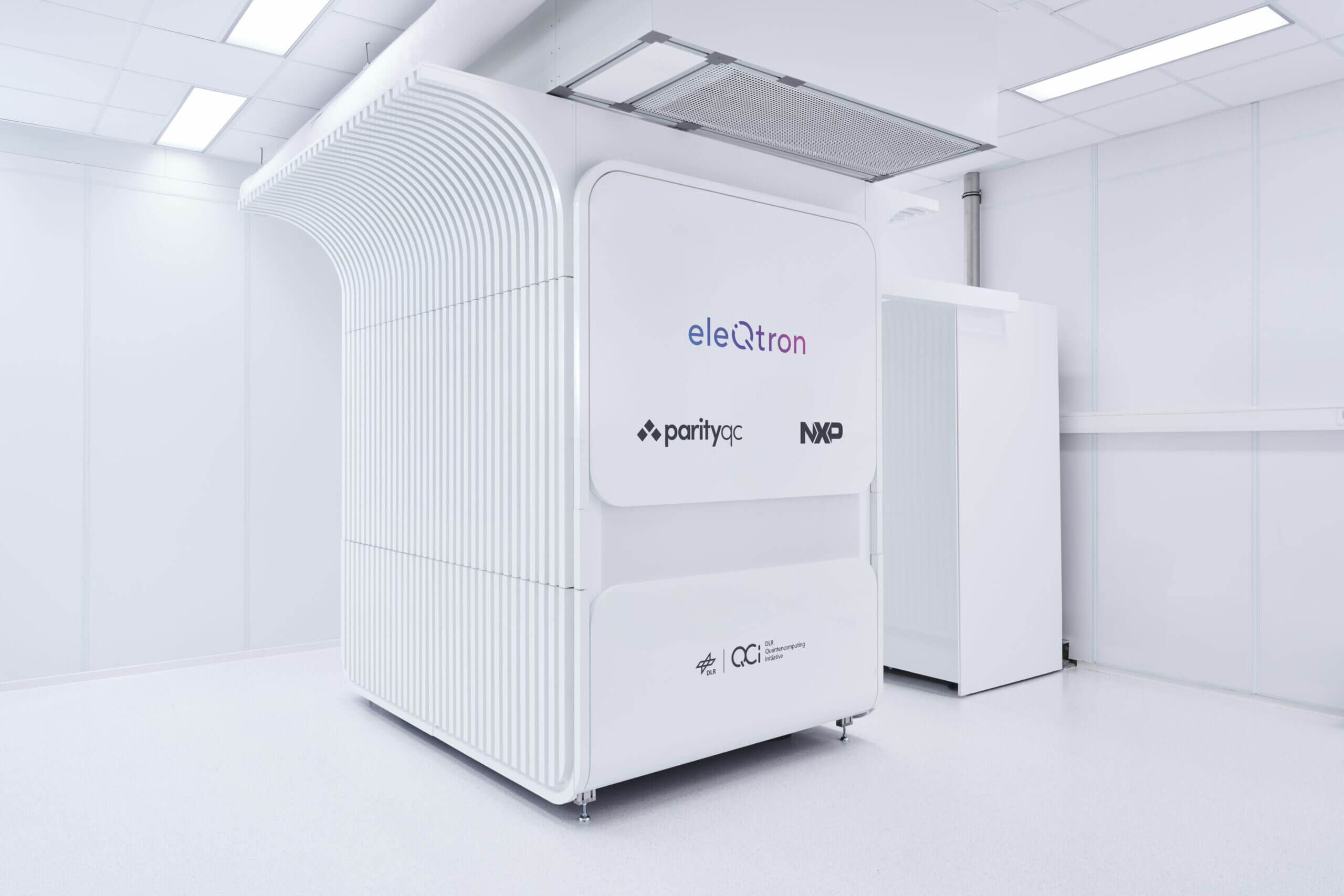
Key Facts
– Macroscopic ion trap
– Microwave technology
– MAGIC architecture from eleQtron
– All-to-all connectivity
– Fully simulated digital twin
Macroscopic qubits
This quantum computer demonstrator from the QSea consortium provides our application teams with close access to real quantum hardware at an early stage. It allows users to gain important experience with real qubits and a tight feedback loop with the HW team – so that they can then immediately start implementing use cases on future, more powerful systems.
6
Ion trap qubits
QSea I
Quantum computer demonstrator with 6 qubits based on ion traps

Key Facts
– Macroscopic ion trap
– Microwave technology
– MAGIC architecture from eleQtron
– All-to-all connectivity
– Fully simulated digital twin
Early qubits, high quality
This quantum computer demonstrator from the QSea consortium provides our application teams with close access to real quantum hardware at an early stage. It allows users to gain important experience with real qubits and a tight feedback loop with the HW team – so that they can then immediately start implementing use cases on future, more powerful systems.
6
Ion trap qubits

DiNAQC · Emulator
Simulated neutral atom qubits
Key Facts
– emulates the behaviour of neutral atom qubits
– emulation includes noise channels
– up to 32 jobs in parallel
– runs on DLR HPC cluster Kratos
Digital atom lattice
With at least 100 qubits, the neutral atom quantum DiNAQC is going to be one of the strongest quantum computers in Germany. Connect user can get used to that compute with our HPC powered DiNAQC emulator with up to 30 qubits with simulated noise channels for rapid prototyping and the real feel.
30
simulated qubits
DiNAQC · Emulator
Simulated neutral atom qubits

Key Facts
– emulates the behaviour of neutral atom qubits
– emulation includes errors
– all to all connectivity
– up to 32 jobs in parallel
– runs on DLR HPC cluster Kratos
Digital atom lattice
With at least 100 qubits, the neutral atom quantum DiNAQC is going to be one of the strongest quantum computers in Germany. Connect user can get used to that compute before it becomes available with our HPC powered DiNAQC emulator that offers up to 30 all-to-all connected qubits with simulated errors.
30
simulated qubits
·
Any 1-qubit gate fidelity
Any 1-qubit gate fidelity
QSea I & QSea II · Digital twins
Fully simulated digital twins

Key Facts
– Complete simulation of the QSea I & QSea II hardware
– Freely adjustable noise sources and parameters
– Up to 20 simulated qubits
– All-to-all connectivity
– Switchable extra functions
Like the real thing, only better
Sometimes it has to be a simulacrum: With this digital twin of the QSea I, we not only provide a realistic simulation of the real hardware, but also make it possible to fine-tune its parameters. This allows us to develop tricky quantum algorithms that utilise the real properties of the system, such as its noise. And agile algorithms can be tested under controlled conditions before they are implemented on the real system.
20
Simulated qubits
∞
arbitrary 1-qubit gate fidelity
∞
arbitrary 2-qubit gate fidelity
QSea I · Digital twin
Highly detailed simulation of the QSea I
Key Facts
– Complete simulation of the QSea I & QSea II hardware
– Freely adjustable noise sources and parameters
– Up to 20 simulated qubits
– All-to-all connectivity
– Switchable extra functions
Like the real thing, only better
Sometimes it has to be a simulacrum: With this digital twin of the QSea I, we not only provide a realistic simulation of the real hardware, but also make it possible to fine-tune its parameters. This allows us to develop tricky quantum algorithms that utilise the real properties of the system, such as its noise. And agile algorithms can be tested under controlled conditions before they are implemented on the real system.
20
Simulated qubits
∞
arbitrary 1-qubit gate fidelity
∞
arbitrary 1-qubit gate fidelity

UPQC · Carina Emulator
Photon-level simluation of Carina photonic processor
Key Facts
– simulates qubits and the underlying photons
– 8 photonic input qubits, 4 photonic calculation qubits
– converts gate-based problems into measurement-based programmes
– compilation on Carina hardware
Compute with simulated light
4
simulated qubits
UPQC · Carina Emulator
Photon-level simluation of Carina photonic processor

Key Facts
– simulates qubits and the underlying photons
– 8 photonic input qubits, 4 photonic calculation qubits
– converts gate-based problems into measurement-based programmes
– compilation on Carina hardware
Compute with simulated light
Photonic quantum computers are a bit different. With this emulator you can quickly check how your gate-based approach performs on a measurement-based device.
4
simulated qubits
x %
Any 1-qubit gate fidelity
x %
Any 1-qubit gate fidelity
XAPHIRO · Emulator
Emulated ion-trap qubits

Key Facts
– emulates the behaviour of ion-trap qubits
– noise model based on real XAPHIRO hardware
– all-to-all qubit connectivity
– up to 32 jobs in parallel
– runs on DLR HPC cluster Kratos
Digital ion-trap qubits from Hamburg
Before Qudora’s 50+ qubits quantum computer XAPHIRO – built in Hamburg – is available, users can get acquainted with the system on this 24 qubit emulator with full error simulation and all-to-all connectivity, powered by our HPC cluster Kratos.
24
simulated qubits
99,99 %
1-qubit gate fidelity
99,9 %
2-qubit gate fidelity
XAPHIRO · Emulator
Emulated ion-trap qubits

Key Facts
– emulates the behaviour of ion-trap qubits
– noise model based on real XAPHIRO hardware
– all-to-all qubit connectivity
– up to 32 jobs in parallel
– runs on DLR HPC cluster Kratos
Digital ion-trap qubits from Hamburg
Before Qudora’s 50+ qubits quantum computer XAPHIRO – built in Hamburg – is available, users can get acquainted with the system on this 24 qubit emulator with full error simulation and all-to-all connectivity, powered by our HPC cluster Kratos.
24
simulated qubits
99,99 %
1-qubit gate fidelity
99,8 %
2-qubit gate fidelity

REDAC
Fully digitally configurable analogue computer (yes)
Key Facts
– solves ODEs, PDEs, signal primitives, neural-network inference, and emulates gate-based quantum circuits
– two hardware time-scale factors: k₀ = 100 and k₀ = 10,000
– 2,688 summing lanes and > 1,000 sample-&-hold stages
– 200 selectable functions
– modular and virtualizable
– analog bandwidth 100 kHz – 1 MHz
– full software stack with the typed analang language and the redacc compiler
– and sooo much more
The analogue future of compute
The REDAC is the analog-computing member of the DLR QCI portfolio: a reconfigurable analog–digital hybrid computer that solves differential equations directly in continuous-time physics, running at room temperature in the 1–100 W range. It solves ODEs, PDEs, signal primitives and neural-network inference, and — developed with the DLR Institute of Quantum Technologies — it emulates gate-based quantum circuits by an exact classical mapping to coupled harmonic oscillators (Briggs & Eisfeld), importing circuits from Qiskit and reproducing a 3-qubit QFT at 0.9943 fidelity. It complements the initiative’s qubit platforms, is deployed at DLR today, and ships with a full compiler and cloud software stack – and you can access it here on Connect.
180k
switches
1k
integrators
500
multipliers
5k
coefficient elements
REDAC
Fully digitally configurable analogue computer (yes)
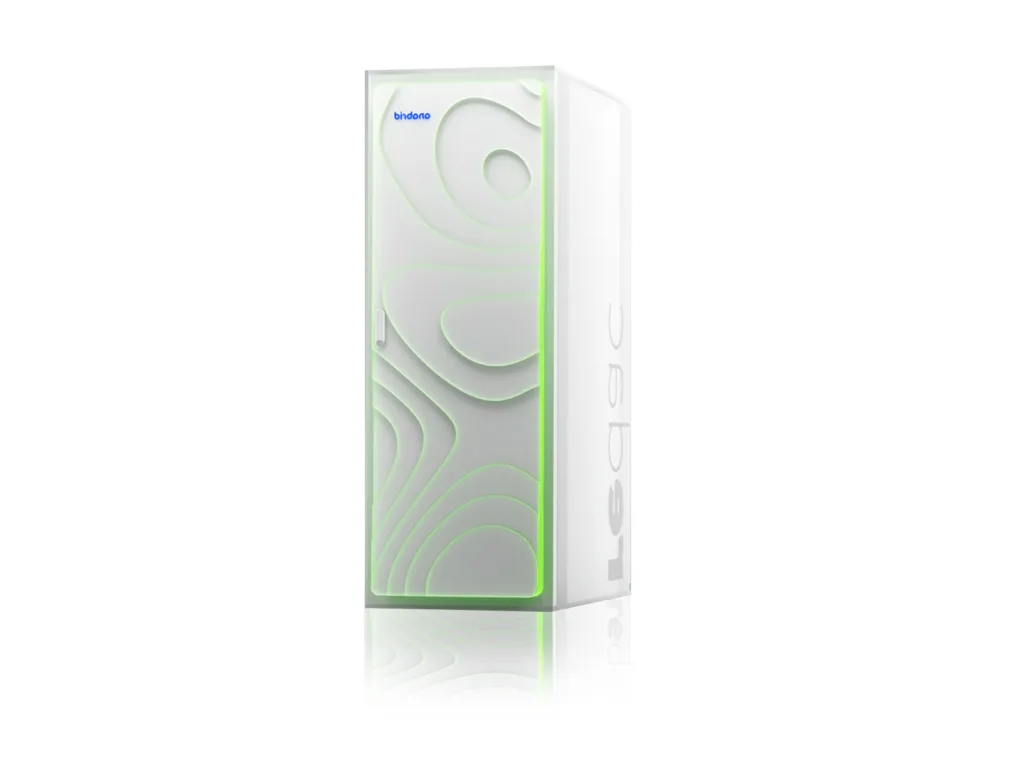
Key Facts
– solves ODEs, PDEs, signal primitives, neural-network inference, and emulates gate-based quantum circuits
– two hardware time-scale factors: k₀ = 100 and k₀ = 10,000
– 2,688 summing lanes and > 1,000 sample-&-hold stages
– 200 selectable functions
– modular and virtualizable
– analog bandwidth 100 kHz – 1 MHz
– full software stack with the typed analang language and the redacc compiler
– and sooo much more
The analogue future of compute
The REDAC is the analog-computing member of the DLR QCI portfolio: a reconfigurable analog–digital hybrid computer that solves differential equations directly in continuous-time physics, running at room temperature in the 1–100 W range. It solves ODEs, PDEs, signal primitives and neural-network inference, and — developed with the DLR Institute of Quantum Technologies — it emulates gate-based quantum circuits by an exact classical mapping to coupled harmonic oscillators (Briggs & Eisfeld), importing circuits from Qiskit and reproducing a 3-qubit QFT at 0.9943 fidelity. It complements the initiative’s qubit platforms, is deployed at DLR today, and ships with a full compiler and cloud software stack – and you can access it here on Connect.
180k
switches
1k
integrators
500
multipliers
5k
coefficient elements
XQ1i
Room temperatur NV center demonstrator

Robust quantum computing
With a system like this you can use a handfull of real qubits for (some) real world problems like using noise for the simulation of molecules in their environment or an H2 molecule on just one qubit. This won’t solve big scientific questions or enable new quantum algorithms, but it will get you ahead in understanding the behaviour of real quantum hardware.
4
NV centre qubits
> 95 %
1-qubit gate fidelity
> 90 %
2-qubit gate fidelity
Key Facts
– works at room temperature
– mobile and robust
– demonstrator for educational environments
XQ1i
Room temperatur NV center demonstrator
Key Facts
– works at room temperature
– mobile and robust
– demonstrator for educational environments
Robust quantum computing
With a system like this you can use a handfull of real qubits for (some) real world problems like using noise for the simulation of molecules in their environment or an H2 molecule on just one qubit. This won’t solve big scientific questions or enable new quantum algorithms, but it will get you ahead in understanding the behaviour of real quantum hardware.
4
NV centre qubits
> 95 %
1-qubit gate fidelity
> 90 %
1-qubit gate fidelity

SQ-RT w/ Princess QPU
Quantum computer based on NV centres in diamond with sulphur dopants
4
NV centre qubits
> 95 %
Gate quality 1-qubit gates
> 90 %
Gate quality Multi-qubit gates
Mobile for first experiences
On this freely programmable and diamond-based 4-qubit system, our teams and partners gain their first experience with real qubits and test simple algorithm and gate ideas in a realistic environment.
Thanks to its small space and energy requirements and its robustness, we operate the SQ-RT in our QCI Lab in Hamburg.
Key Facts
– Operation at room temperature
– Mobile use
– Graphical UI
– Ideal for training courses and exhibitions
– Certified product safety
SQ-RT w/ Princess QPU
Quantum computer based on NV centres in diamond with sulphur dopants

Key Facts
– Operation at room temperature
– Mobile use
– Graphical UI
– Ideal for training courses and exhibitions
– Certified product safety
Mobile for first experiences
On this freely programmable and diamond-based 4-qubit system, our teams and partners gain their first experience with real qubits and test simple algorithm and gate ideas in a realistic environment.
Thanks to its small space and energy requirements and its robustness, we operate the SQ-RT in our QCI Lab in Hamburg.
4
Qubits
> 95 %
Gate quality 1-qubit gates
> 90 %
Gate quality Multi-qubit gates
Even more Future of Compute
We have commissioned the construction and operation of a good dozen more computers. The exact number may change as the project progresses.
QSea I · Ion trap quantum computer
A modular and scalable quantum computer based on stored ion qubits in several networked ion trap modules.

QSea II · Ion trap quantum computer
A modular and scalable quantum computer based on stored ion qubits in several networked ion trap modules.
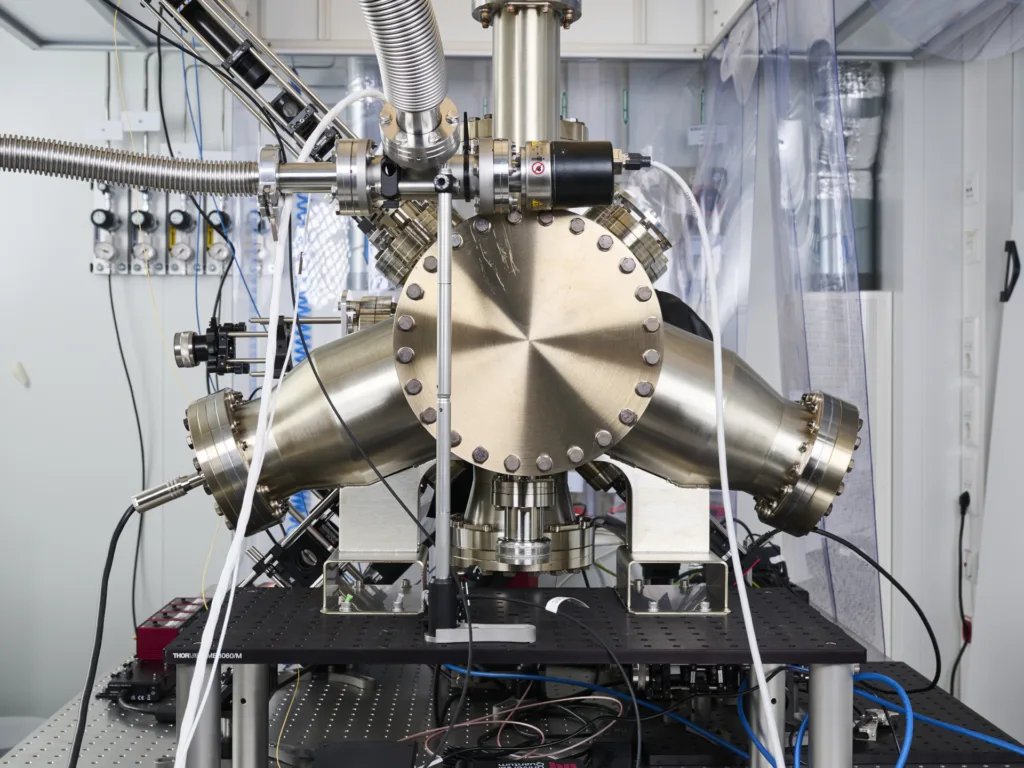
Toccata · Ion trap quantum computer
A user-friendly, reliable and scalable quantum processor with at least 50 qubits.
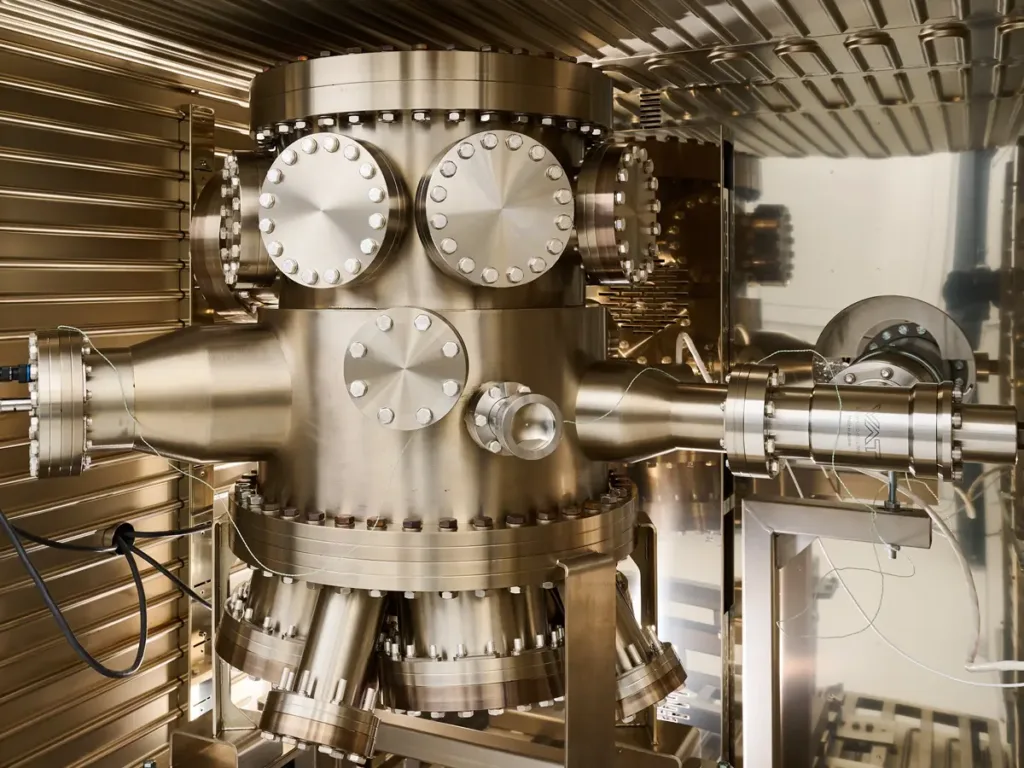
Legato · Ion trap quantum computer
A fully scalable quantum computer consisting of four interconnected chip modules.

UPQC · 2 photonic quantum computers
+ Carina: a photonic quantum processor with 8 input modes
+ Dedalo: a universal photonic quantum computer with 64 input modes
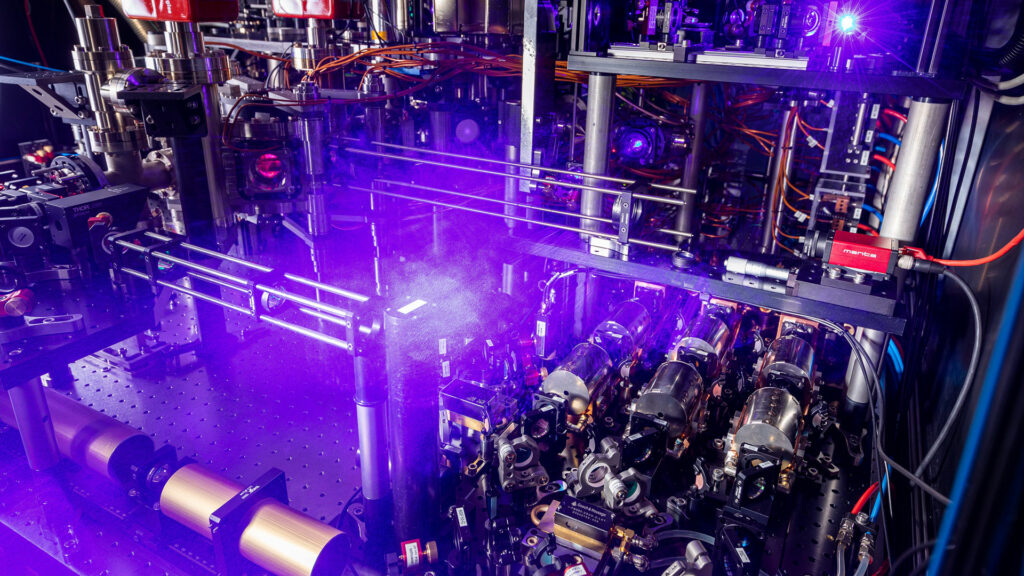
DiNAQC · Neutral Atom Quantum Computer
A highly scalable digitalised quantum computer with 100 qubits based on neutral atoms.

COMIQC · Solid-state spin quantum computer
An error-correctable quantum computer with 50 qubits based on electron and nuclear spin registers in organic designer molecule crystals.

XAPHIRO · Ion trap quantum computer
Microfabricated quantum processor with at least 50 fully functional, high-quality qubits.
FAQ
Initially, only DLR QCI projects will have access to QCI Connect. However, we will extend access to other user groups as soon as possible. You can request access permission here.
Yes, an emulator for up to 24 qubits and a compiler are currently available, with which user circuits can be transpiled to the actual qubit connectivity and the available native gateset. Further features such as a library with application examples are planned for the future.
Of course, QCI Connect can be used both via the web front end and via API access. Additional functions, such as job batching, are also available via API.
All computers are operated or set up within Germany at the innovation centres in Ulm and Hamburg.


Dev Log
QCI Connect SDK 0.10.0 veröffentlicht
Wir freuen uns, die neue Version v0.10.0 des QCI Connect SDK zu veröffentlichen, um sowohl Quantenexperten als auch Einsteiger:innen eine noch stärkere…
Release: v0.12.0 und v0.11.0 des QCI Connect SDK
Wir freuen uns, euch gleich von zwei neuen Releases des QCI Connect SDK zu berichten: v0.11.0 (8. September 2026) und v0.12.0 (8.…
QCI Connect SDK 0.9.0 veröffentlicht
Was ist eine Compute-Plattform ohne SDK? Jetzt haben wir Version 0.9.0 der SDK veröffentlicht, mit der registrierte Connect-Nutzer:innen auf unsere Hardware, Simulatoren…


