
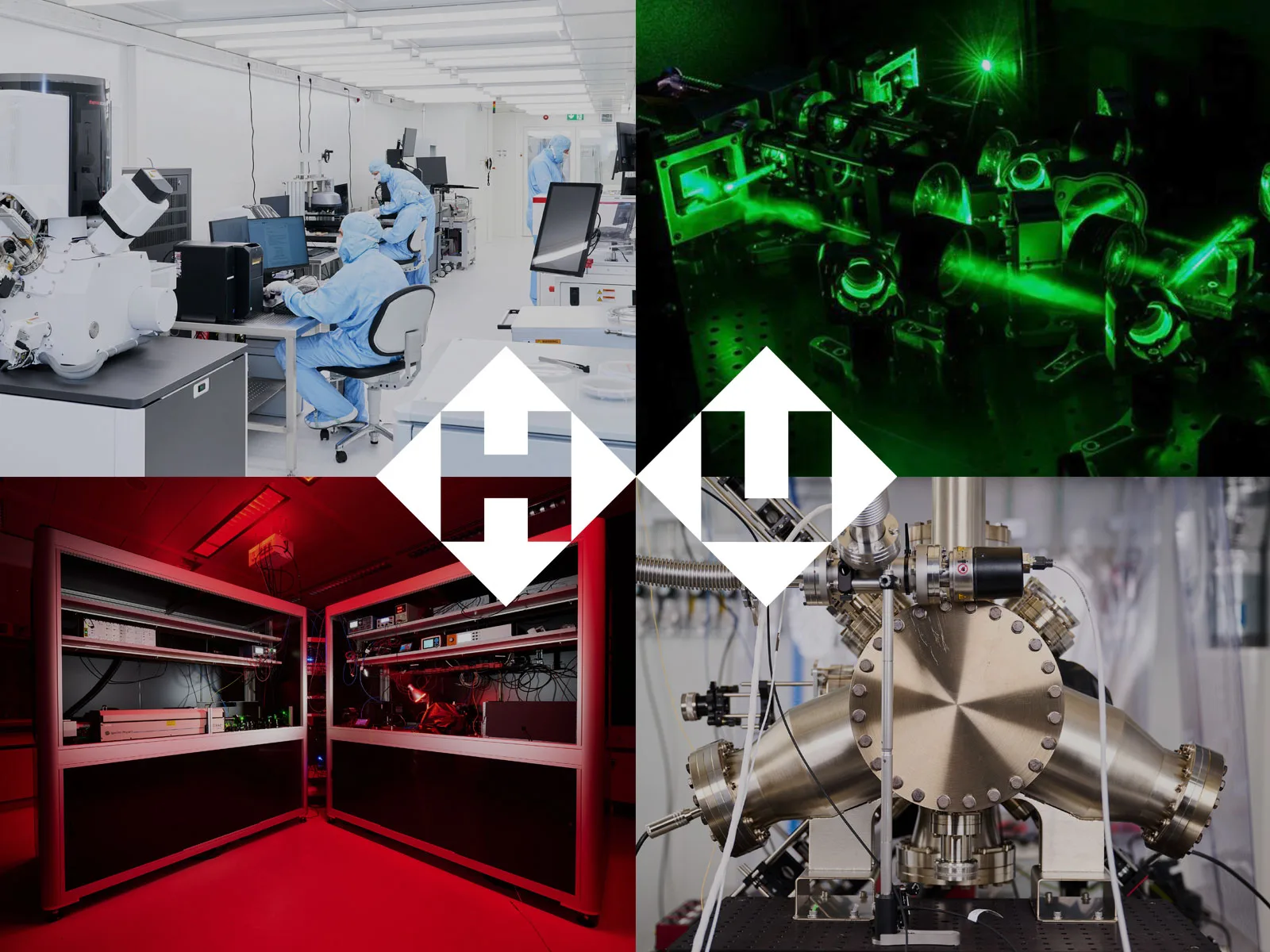
It’s exciting how the innovation center was built and equipped, the implementation was challenging, and the atmosphere is wonderful. With adjectives like these, Alain Pierrot, Manager of our Innovation Center Hamburg, describes his workplace—or, to be completely honest: his creation. For Kathrin Höppner, Manager of the Innovation Center Ulm, the description is a bit drier but no less impactful. She describes the enormous task of creating a crystallization point for the quantum computing ecosystem, a vehicle for the rapid industrialization of quantum computing—indeed, the beating heart of the DLR QCI—rather functionally: “Here we host eight startups and provide these external companies with offices and laboratories,” she says. “With my small team, I am responsible for ensuring that the startups find everything they need on site to fulfill their orders.”


You have to listen carefully to the phrase “find everything they need.” In Kathrin’s case, that means: 2,960 square meters of state-of-the-art laser laboratories, four floors, and an enormous high-tech basement (called only ‘Technikum 6’) full of quantum computing equipment, along with an endless stream of exciting, challenging, and wonderful tasks that arise in the day-to-day operation of the innovation center. For Alain: 1,640 square meters including a cleanroom, five laser laboratories, and half a foothold at DESY. Let’s be clear upfront: As the manager of an innovation center, the work never ends—before commissioning, during commissioning, and beyond.
Two years to the starting line
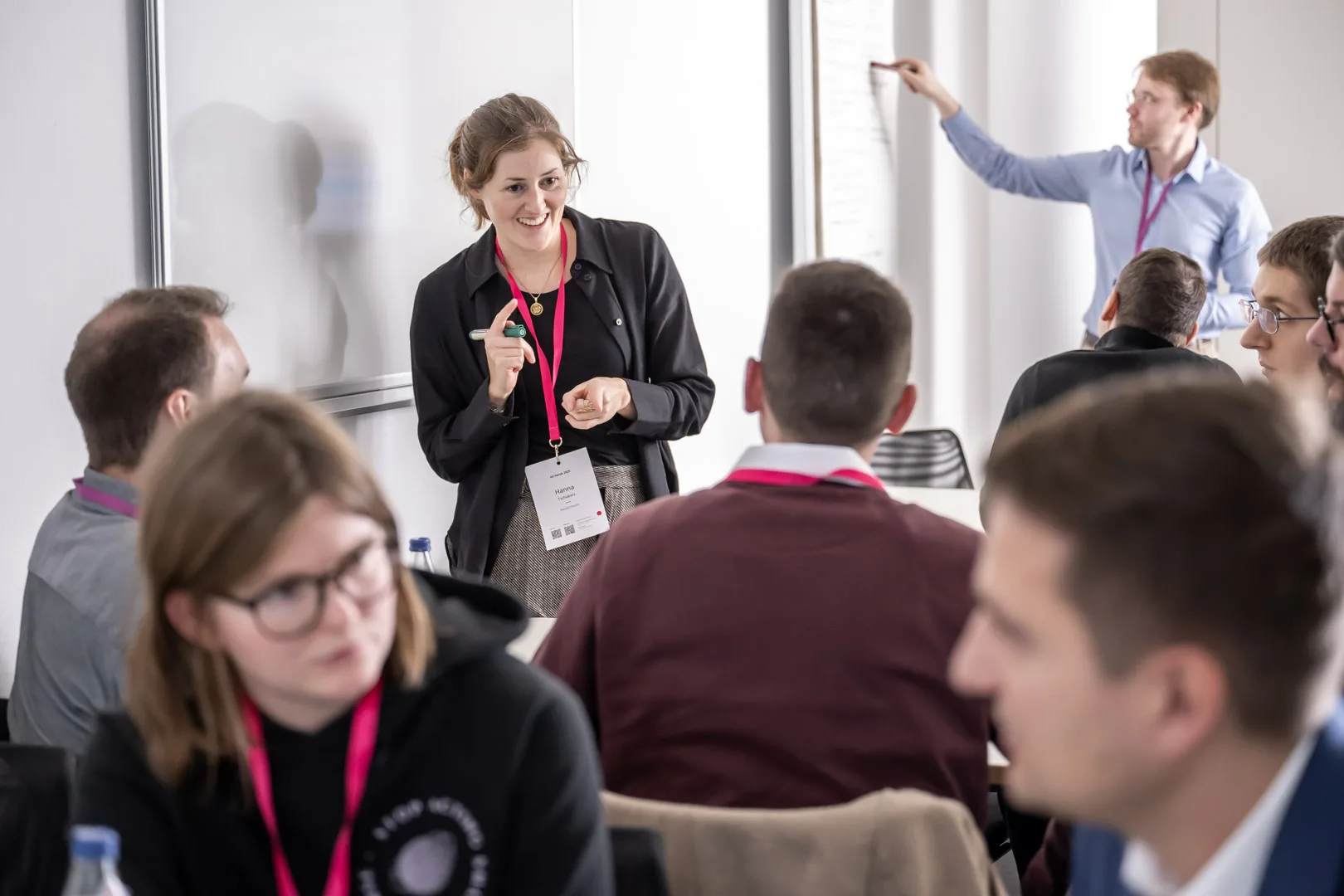
The innovation centers fulfill an important task for us: They are the places where the theoretical construct of the DLR QCI – technology transfer, industrialization of quantum computing, coworking and collocation, community & ecosystem – takes concrete form. This requires careful planning.
From the first drawings to the point when the laboratories were handed over to the startups, two and a half years had passed, Alain recounts. It was similar in Ulm. Actually far too little time – a massive challenge. “That’s why the move-in of the first companies was such an important milestone.”
Our innovation centers have two complementary functions: They are real spaces where real people can realize real ideas on real machines. For this, laboratories, cleanrooms, workshops, offices, and coworking spaces are needed. But they also have a strong symbolic character: They are intended to be lighthouses for a future technology, meeting points for interesting minds with exciting ideas, an anchor and communicative hub for the local ecosystems, and of course the breeding ground for a new, strong ecosystem that enables sovereign, competitive quantum computing from Germany and Europe. All of this requires space, but even more so it requires a sense of identity and fertile soil from which a genuine community can grow.
As much as nowhere else
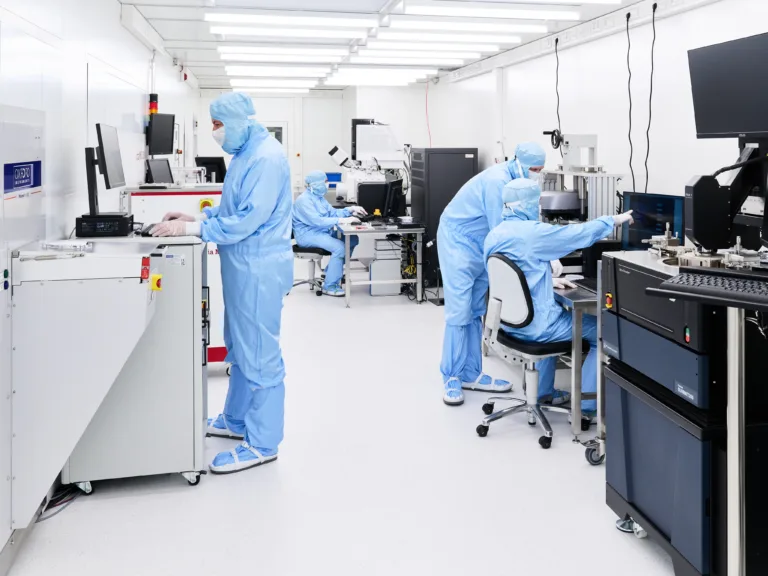
The special feature of both locations lies in the complete ecosystem of development, manufacturing, and operation of quantum computers that they represent and address.
At the Innovation Center Hamburg, the focus is on the manufacturing of chips for ion traps. In the cleanroom, the startups – under the guidance of the team from the DLR Institute for Quantum Technologies, Department of Integration of Micro- and Nanosystems – produce the chips that they then install directly next door in the laser laboratory into their quantum computers. Alain: “To my knowledge, this combination of both facilities under one roof is truly unique.”
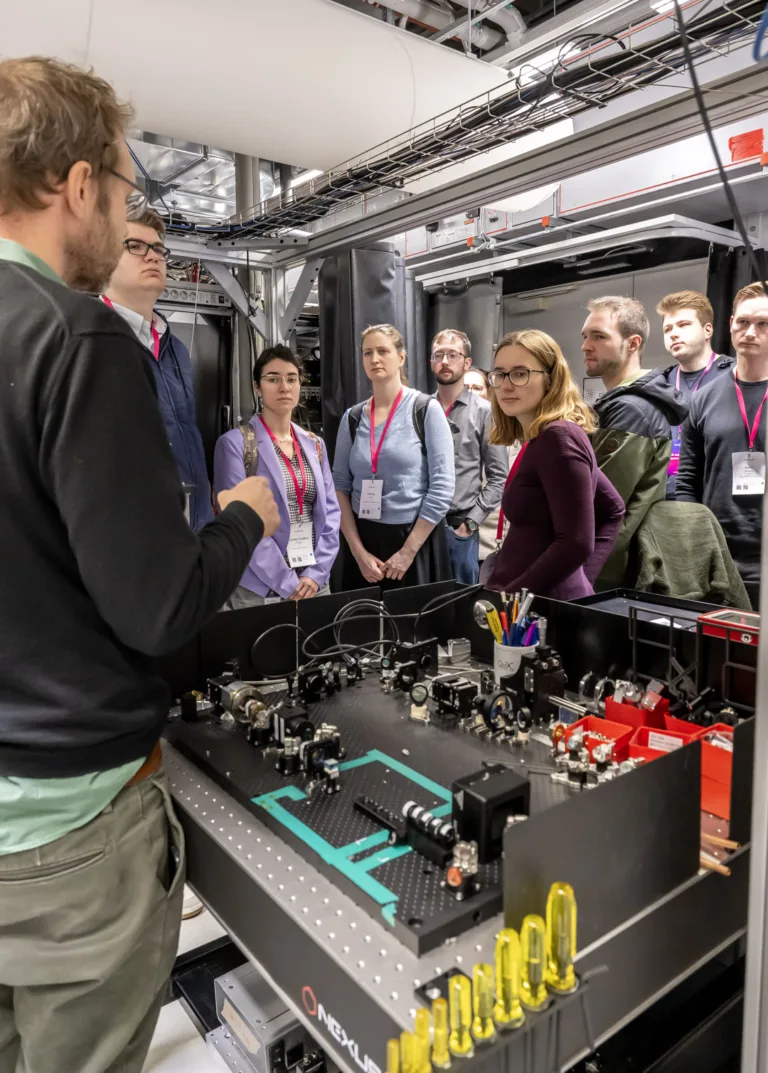
The Innovation Center Ulm relies on a uniquely diverse ecosystem with various quantum technologies. Here we deliberately developed the NV-center ecosystem with quantum computers and the necessary enabling technologies. In the same building are the DLR Institutes for Quantum Technologies (including their laboratories), for AI Security, and for Technical Thermodynamics. In addition to the six startups housed through DLR contracts, other companies join the emerging ecosystem via room bookings. Nowhere else can you find so much research, so many startups and industry players, and such a concentration of quantum computing offerings and applications in one place.
In theory: extremely stressful
Many startups under one roof also means a lot of competition under one roof. “There is indeed a small inhibition among the startups, as everyone wants to keep their own secret ingredients and all have their own contracts to focus on,” says Alain. “Nevertheless, the players we bring together here are very open to constructive exchange, suggestions, support, and all kinds of questions. That’s why the interaction is actually very pleasant and collegial, even among different actors.”
It can always be better, of course. Alain and Kathrin, together with their teams, take care of that through community activities: In Ulm there is the monthly Quantum Coffee – coffee, cookies, and short presentations. In Hamburg, the workshop is the central place to come together and plan the next quantum leap over good coffee – or to be told by someone who knows that quantum leaps are extremely small jumps, not to say the smallest possible jumps, and are therefore a rather poor metaphor, or at least one that works contrary to the originally intended meaning, etc., etc. (In addition to a coffee machine and a second one brought in by a startup, there is of course tea and significantly less nerdy conversations.)
Innovation centers innovate
The development and implementation of quantum technologies is an enormous challenge for research, startups, industry, and the public sector. They must research at the edge of the thinkable, develop at the edge of the possible, and become useful at the edge of the existing. Everything at the edge, everything directed toward the center. The task of Kathrin and Alain is to create the infrastructures so that this happens quickly, efficiently, and purposefully: turning possibility into reality – a reality that affects us all and is guaranteed to be exciting, challenging, and wonderful.


